



Environmental, Social & Governance (ESG)
As part of our Vision to build a resilient and future-focused sector, CBAFF is committed to strengthening environmental, social and governance (ESG) alignment across our industry. We recognise that responsible and sustainable business practices are essential to maintaining trust, driving innovation, and ensuring the long-term success of New Zealand’s freight forwarding, logistics, and customs broking community.
We welcome your input as this important work evolves. If you have feedback, ideas, or would like to be involved, please contact us at .
Together, we can build a resilient logistics sector that drives meaningful change for both our industry and the environment.
_________________________
Our Vision
“We aim to operate as a responsible and resilient organisation that reduces environmental impact, supports our people and communities, and upholds transparent and ethical governance practices aligned with Aotearoa New Zealand values.”
With one native tree donated for every delegate, CBAFF has contributed 813 trees* over the two years, helping to fund five planting projects across New Zealand.
* 813 trees will help to remove about 180 tonnes of carbon dioxide from our atmosphere over 50 years.
_________________________
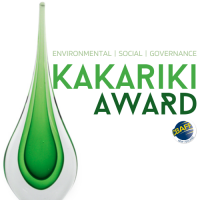
Kākāriki Award
Launched in 2024, the Kākāriki Award reflects CBAFF’s commitment to Environmental, Social, and Governance (ESG) principles, recognising organisations leading the way in sustainable business practices.
Open to individuals, teams, businesses, government agencies, and industry associations, this award recognises those who have made a significant impact through innovative solutions and exceptional industry contributions.
Resources
CBAFF is committed to supporting members on their ESG journey. To help you get started, we have developed a range of practical starter resources to guide your initial steps.
- What does ESG Stand For?
What does ESG Stand For?
The “E” in ESG stands for EnvironmentalIn an ESG strategy, the Environmental component focuses on how an organisation impacts and manages its impact on the natural environment.Typical areas that it covers include:- Greenhouse Gas emissions (GHGs) and climate impact (eg - CO₂ reduction targets, energy efficiency)
- Energy use and renewable energy adoption
- Waste management and circular economy initiatives
- Water usage and conservation
- Pollution control (air, water, soil)
- Sustainable sourcing of materials
- Biodiversity and land use impacts
Essentially, it focuses on how responsibly an organisation uses natural resources and manages its environmental impact.The “S” in ESG stands for SocialIn an ESG strategy, the Social component focuses on how an organisation manages its relationships with people, employees, customers, suppliers, and the wider community.Typical areas that it covers include:- People & Workforce – employee wellbeing, health and safety, diversity, equity and inclusion, fair labour practices, training, development and talent retention
- Supply Chain & Human Rights – ethical sourcing, modern slavery prevention, fair wages and safe working conditions across the supply chain
- Customer & Community Impact – product safety, responsible marketing, community engagement and contribution, social impact initiatives
- Stakeholder Relationships – transparency and trust with employees, partners and communities
Social focuses on how an organisation supports and values its people, fosters a positive workplace culture, and contributes responsibly to the wider community.The “G” in ESG stands for GovernanceIn an ESG strategy, Governance covers how a company is led, managed, and held accountable. It’s about the systems, rules, and practices that ensure the organisation operates ethically, responsibly, and transparently.Typical areas that it covers include:- Board structure and independence
- Executive accountability and compensation
- Risk management and internal controls
- Ethical conduct and anti-corruption measures
- Compliance with laws and regulations
- Transparency in reporting and decision-making
- Shareholder rights and stakeholder engagement
Governance is about ensuring the organisation is led and managed responsibly, with clear accountability, ethical decision making, and strong oversight.- ESG Starter Strategy
ESG Starter Strategy
A foundation document to begin our Environmental, Social & Governance (ESG) journey1. Executive SummaryThis ESG Starter Strategy outlines a practical and phased approach for your organisation to begin integrating Environmental, Social, and Governance considerations into our operations. ESG is becoming increasingly relevant for NZ organisations due to evolving regulatory expectations, particularly around climate disclosures, modern slavery, and governance transparency, alongside stakeholder expectations for responsible business practices.This document provides a simple roadmap built around what matters most for SMEs - compliance, operational efficiency, reputation, and future-proofing the business.2. Why ESG Matters for Our OrganisationExternal Drivers- Increasing NZ regulatory momentum: NZ’s climate-related disclosure framework is expanding, even if currently mandatory only for large organisations. SMEs are encouraged to voluntarily measure emissions and improve sustainability practices.
- Customer & supply chain expectations: Larger customers increasingly require sustainability data from SME suppliers.
- Cost savings & efficiency: Energy efficiency, waste reduction, and responsible resource use often directly reduce operating costs.
Internal Benefits- Strengthened brand and trust
- Improved recruitment & retention
- Better risk management and long-term resilience
3. ESG Material Topics for NZ SMEsBased on NZ SME sustainability guidance and local regulatory trends, we propose the following priority topics:Environmental (E)1. Emissions & Energy Use2. Waste Reduction & Recycling3. Resource Efficiency (water, materials)Social (S)1. Health, Safety & Wellbeing2. Workforce development and skills3. Diversity, Equity & Inclusion (DEI)4. Community Engagement & Māori partnership considerationsGovernance (G)1. Policies & Ethical Standards2. Supply Chain Transparency3. Risk Management (including climate risk)4. Board/Leadership oversight4. Recommended Frameworks & Tools for SMEs- Starter for Ten - NZ SME Sustainability Topics (10-topic framework)
- EECA Energy Efficiency Support & Guides (for emissions & energy reductions)
- SBC’s “Making ESG Part of Your Risk Management” (guidance on embedding ESG into ERM)
- Simple carbon calculators (eg - Toitū or EECA-supported tools)
5. Governance & Accountability Structure- ESG Sponsor: Senior leader responsible for oversight
- Working Group: Cross-functional team (ops, HR, finance)
- Reporting Frequency: Quarterly internal updates; annual public summary
- Integration: ESG risks incorporated into organisational risk management systems.
6. Next Steps & Immediate Actions1. Confirm ESG sponsor and working group2. Begin emissions measurement and waste audit3. Draft simple ESG policies (Code of Conduct, Supplier Standards)4. Start a small-scale, positive initiative within 60 days (eg - recycling upgrade, wellbeing workshop, energy efficiency upgrade)- ESG Starter Pack – Environmental (E)
ESG Starter Pack – Environmental (E)
1. Measure your GHG footprintMeasure your GHG footprint using an SME friendly calculator.NZ SMEs are encouraged to voluntarily begin emissions measurement as a first step.2. Identify your top 2-3 sources of emissions or energy useEnergy use, transport and waste are typical SME hotspots.3. Start implementing easy energy-efficiency improvementseg – LED lighting, equipment maintenance or EECA-supported efficiency actions.Lighting upgrades – convert to LED and smart controls (occupancy/daylight sensors) in warehouses, offices and yards.Align with NZ Green Building Council practices via EECA sector guidance.4. Conduct a simple waste auditUnderstanding what you throw away helps identify reduction and recycling opportunities.5. Introduce recycling or waste-reduction initiativesSmall operational improvements can reduce landfill costs and environmental impact.6. Explore opportunities for circular economy practicesSMEs can reduce costs and resource use by reusing materials or improving process efficiency.- ESG Starter Pack – Social (S)
ESG Starter Pack – Social (S)
1. Strengthen Health, Safety & Wellbeing PracticesThis is a core New Zealand requirement and supports a positive workplace culture.2. Run a wellbeing check-in or initiative for Your TeamSupports employee morale and compliance with the Health and Safety at Work Act.3. Start developing Diversity, Equity & Inclusion (DEI) principlesDEI is a key topic in NZ SME sustainability guidance.4. Review skills and workforce development needsUpskilling is one of the recommended NZ SME sustainability metrics.5. Engage with local community initiativesEven simple steps like sourcing locally can contribute positively to community wellbeing.6. Map potential social risks in your supply chainParticularly around modern slavery and labour practices.- ESG Starter Pack – Governance (G)
ESG Starter Pack – Governance (G)
1. Establish Or Refresh a Basic Code Of ConductGovernance expectations include ethical standards and transparency.2. Create A Simple Supplier PolicyHelps clarify expectations around ethics, environment, and social issues.3. Assign An Internal ESG Sponsor or Working GroupGovernance frameworks emphasise the importance of leadership connection and oversight.4. Include ESG Considerations in Your Organisational Risk RegisterEmbedding ESG into Risk Management is identified as best practice for SMEs.5. Begin Documenting ESG-Related Decisions and ProcessesSupports transparency and future reporting expectations.6. Familiarise Yourself with NZ’s Evolving ESG Regulatory EnvironmentClimate disclosures, modern slavery proposals, and governance reforms are shifting.- What EECA Is
What EECA Is
EECA is a Crown agency whose purpose is to mobilise New Zealanders to be world leaders in clean and clever energy use.It works to improve the energy efficiency of New Zealand homes and businesses, supports renewable energy uptake, and provides information, tools, and funding to help people and organisations reduce energy waste and emissions.EECA’s Work includes:1. Funding & GrantsEECA offers a wide range of co-funding programmes to help businesses and households decarbonise. This includes:- Warmer Kiwi Homes programme – grants covering 50–90% of insulation and heating for eligible homes
- Low Emissions Heavy Vehicle Fund – grants covering up to 25% of the purchase or conversion of zero/low-emissions heavy vehicles
- Programmes for industrial decarbonisation, energy audits, feasibility studies, and technology demonstration projects
2. Business SupportEECA provides:- Energy management planning (co-funding up to 40% to help businesses reduce energy use)
- Sector-specific pathways for manufacturing, freight, commercial buildings, etc. to reduce emissions and improve efficiency
- Tools to help businesses measure emissions, similar to the Climate Action Toolbox approach of measuring before reducing
3. Transport DecarbonisationEECA supports NZ’s transition to cleaner transport through:- Funding for electric and hydrogen vehicles, charging, vessels, and off-road machinery via historic Low Emission Transport Fund (LETF) programmes
- Ongoing Heavy Vehicle Fund for zero-emission trucks and conversions
4. Home Energy EfficiencyEECA helps households’ lower energy bills and improve comfort via:- Warmer Kiwi Homes programme (insulation + heat pumps) reaching thousands of NZ homes
- Guidance on heating, insulation, solar, and efficient appliances
RSS Facebook Email Linkedin Contact Member Feedback